Why Squash Bugs Are a Serious Threat
Squash bugs are one of the most persistent and frustrating pests for giant pumpkin growers. They feed by piercing plant tissue and sucking sap, which weakens vines and reduces the plant's ability to support rapid fruit growth. Even worse, they can transmit cucurbit yellow vine disease (CYVD), a bacterial infection that causes sudden, dramatic wilting and can kill an entire plant in days. CYVD risk is highest in the southern and central US — northern growers face lower but not zero risk.
Squash bugs also feed on fruit stems. For a pumpkin weighing 1,000+ pounds, a weakened stem can crack under the fruit's own weight — potentially ending your season at harvest when you're trying to move it to the scale.
Identification
Knowing what you're looking at is half the battle:
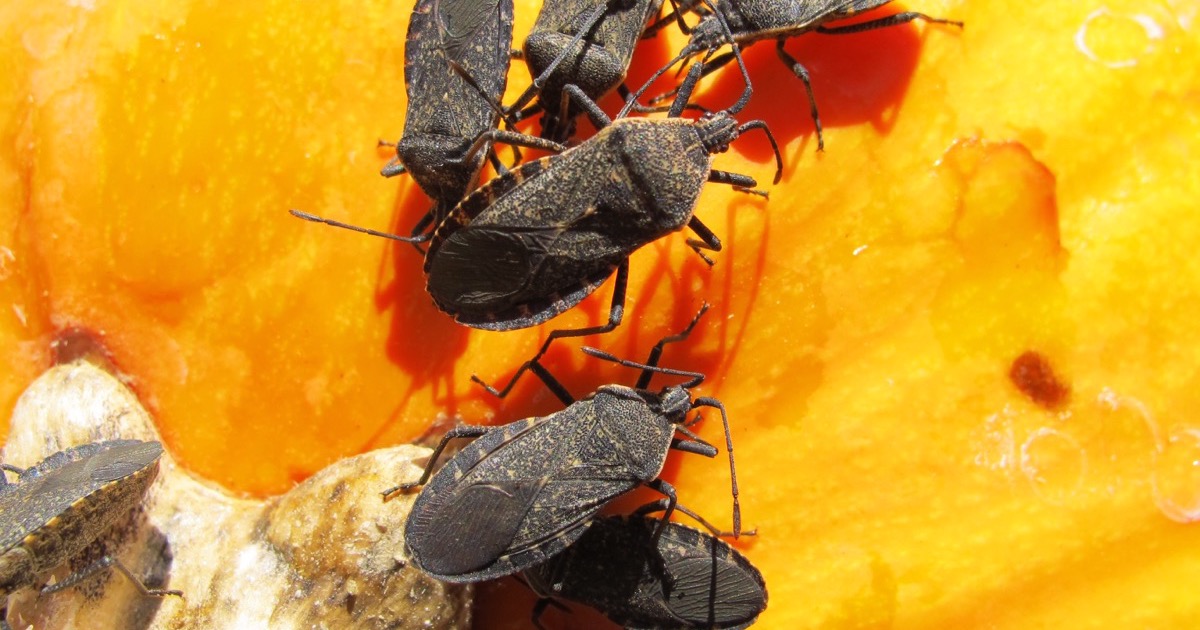
- Adults: Shield-shaped, brownish-gray, about 5/8 inch long. They emit a foul odor when crushed (hence the common name "stink bug" in some regions, though they're not true stink bugs).
- Nymphs: Light green to gray, smaller versions of adults. They move quickly and are easier to kill than adults.
- Eggs: Shiny, bronze-colored, laid in neat clusters on the undersides of leaves, typically along the veins. Egg clusters are your best target for control.
Scouting
Check your plants at least twice a week, focusing on:
- The undersides of leaves, especially large, lower leaves near the soil
- The base of plants where adults hide during the day
- Under any debris, mulch, or boards near your plants
Adults are most active in early morning and late evening. During the heat of the day, they shelter under leaves and at the base of stems.
Prevention
- Crop rotation: Don't plant cucurbits in the same area two years in a row. Adults overwinter in garden debris and emerge in spring looking for host plants.
- Debris removal: Clear all plant matter from the patch after harvest. Squash bugs overwinter under boards, rocks, and old vines.
- Trap boards: Place flat boards or pieces of cardboard on the soil near your plants in the evening. Adults will gather under them overnight. Flip the boards in the morning and destroy the bugs.
- Companion planting: Some growers report that nasturtiums, tansy, and catnip deter squash bugs. Evidence is anecdotal, and in a competitive patch where space is at a premium, the area is better used for vine growth. Consider this a low-priority option.
- Spring perimeter spray: In early spring, before your transplant goes out, spray a perimeter insecticide (permethrin or bifenthrin) around the patch edges and any debris you couldn't remove. This intercepts overwintering adults as they emerge and move toward your plants.
Treatment
Timing is critical — adults are extremely difficult to kill with sprays due to their hard exoskeleton. Focus your efforts on eggs and nymphs:
- Crush egg clusters: This is your single most effective control method. Check leaf undersides daily during peak season (June-July) and scrape off or crush every egg cluster you find. Use duct tape pressed against eggs to remove them cleanly.
- Hand-pick adults and nymphs: Drop them into a bucket of soapy water. Best done in early morning when they're sluggish.
- Neem oil: Effective against nymphs when applied directly. Spray in the evening to avoid leaf burn and to target nymphs as they feed. Do not apply when temperatures exceed 90°F — it can burn foliage in extreme heat.
- Pyrethrin sprays: Effective against nymphs, less so against adults. Apply directly to insects; pyrethrin breaks down quickly in sunlight.
- Insecticidal soap: Works on nymphs through direct contact. Must be reapplied after rain.
Systemic & Contact Chemical Options
For competitive growers managing significant squash bug pressure, synthetic options provide more effective and longer-lasting control than organic sprays alone:
- Imidacloprid (soil drench): A systemic insecticide applied at the base of the plant. It's absorbed through the roots and provides extended protection against squash bugs feeding on plant tissue. Apply early in the season when the plant is actively growing. Note: systemic insecticides can also affect beneficial insects, so weigh the tradeoff
- Permethrin: More effective and longer-lasting than pyrethrin for contact control of nymphs and adults. Apply in the evening when pollinators are less active
- Carbaryl (Sevin): Effective broad-spectrum option. Apply to foliage when nymphs are actively feeding. Broad-spectrum means it will also kill beneficial insects in the area
Squash bugs are one piece of a larger pest management picture. Also see our guides on vine borers, cucumber beetles, and secondary pests, and build a regular scouting program.